
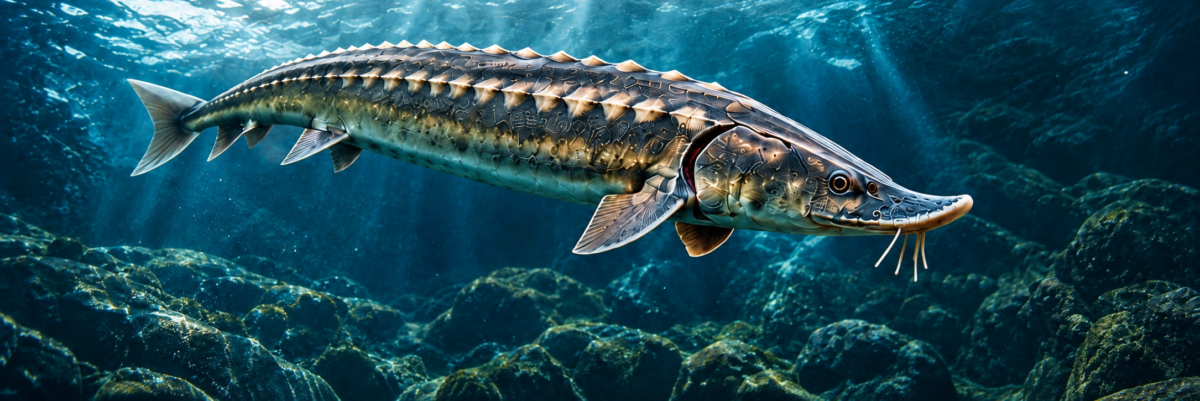

WHAT IS STURGEON?
- An ancient, unique fish
- Cartilaginous skeleton
- 5 rows of bony scutes
- 4 barbels near the mouth
- Toothless
200–250 MILLION YEARS ON EARTH
MOST WELL-KNOWN STURGEON SPECIES
Siberian sturgeon (Acipenser baerii)
Russian sturgeon (Acipenser gueldenstaedti)
Starry sturgeon (Acipenser stellatus)
Sterlet (Acipenser ruthenus)
European sturgeon (Acipenser sturio)
Beluga sturgeon (Huso huso)
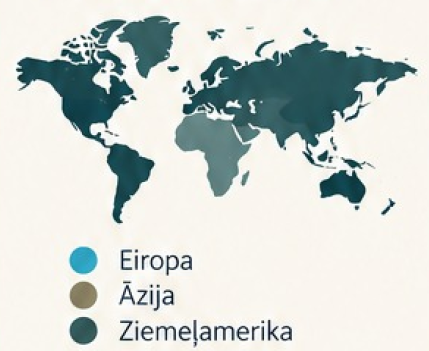
WHERE DO STURGEONS COME FROM?
Natural habitat — rivers, lakes, and coastal waters of Europe, Asia, and North America.
STURGEON CAVIAR – A GIFT OF NATURE
Caviar develops in females and is harvested infrequently — approximately once every 2–8 years depending on the species.
Exceptionally valuable and sought after worldwide.
WHY EAT STURGEON?
- High-quality protein for muscles and recovery.
- Omega-3 fatty acids for heart and brain health.
- B-group vitamins for the nervous system.
- Vitamin D for immunity and strong bones.
- Selenium, phosphorus, and potassium for overall well-being.
STURGEONS ARE ENDANGERED
Many sturgeon species are endangered in the wild. Aquaculture helps preserve this unique fish for future generations.